Biography
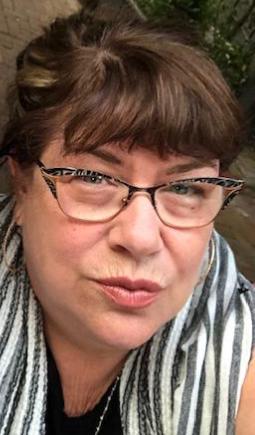
Kirsten T. Saxton

Professor of English
Northeastern University at Mills
k.saxton@northeastern.edu
Kirsten T. Saxton (she/her) is a cultural studies and feminist scholar of 18th-century literature, with a focus on authors and genres whose contributions to the literary landscape have been obscured or repressed. Her work explores intellectual connections between emergent theories and historical narratives to build a more expansive understanding of the past that changes our understanding of our present and invites us to imagine alternative, more just futures. Her interest in collaborative research, place-based situated knowledge, and digital humanities informs all of her work.
Research Focus
I am inspired by the catalyzing relationship between teaching, public engagement, and collaborative research. My scholarship explores how contemporary theoretical readings of historical texts provide new ways to think, not only about the past, but the present. I run a research support consortium for transnational 18th-century scholars and co-organize open access anti-racist pedagogy workshops and teach-ins for 18th- and 19th-century scholars.
My commitment to collaborative research, situated knowledge, and humanities for the public good informs my role as the PI for the $500,000 Mellon Public Humanities-funded program, “We Are the Voices We Have Been Waiting For: Poetry, Performance, and Public Humanities,” a project which offers new approaches to place-based community, scholarship, and social justice. I co-designed a Digital Humanities project that includes a GPS-enabled, time layered, multimedia mapping app curated by the community stakeholders, and was the lead for a $400,000 grant on Digital Literary Studies.
My early work played an important role in the reshaping the field of eighteenth-century literary studies through feminist recovery and feminist cultural studies interventions. My more recent scholarship now more boldly intervenes in a field that remains invested in logics of temporal, national, and settler colonial value.
My current research emphasizes the ways in which reading eighteenth- and nineteenth-century texts (broadly understood) through anti-racist, feminist, queer, and crip theoretical positions offers us productive ways to understand not only historical contexts, but also our own cultural moment. My scholarship explicitly engages with and participates in #BIPOC18, #Bigger6, and V21 Collective communities who are committed to anti-racist, progressive scholarship.
My current book project, “Knowing Bodies/Ghosting History: A Somatic Hypno-Realism” began with a focus on nineteenth-century crime fiction writer and theorist of the paranormal, Catherine Crowe. The project takes as its subject popular work by out of print, non-theorized women writers of popular fiction and metaphysics whose texts model complex somatic ways of knowing, situating vulnerability, locality, thresholds of experience and knowledge through the queer body—the disabled, the poor, the female, the ghost—and presenting these ways of knowing within the genre of the commonplace and the real. I put these texts in conversation with contemporary cultural examples to make visible a radical model for truth telling and localized resistance that presses against taxonomic, Eurocentric, Cartesian ways of knowing and of telling.
 Kirsten T. Saxton